

Board Book Printing: A Complete Guide for Publishers
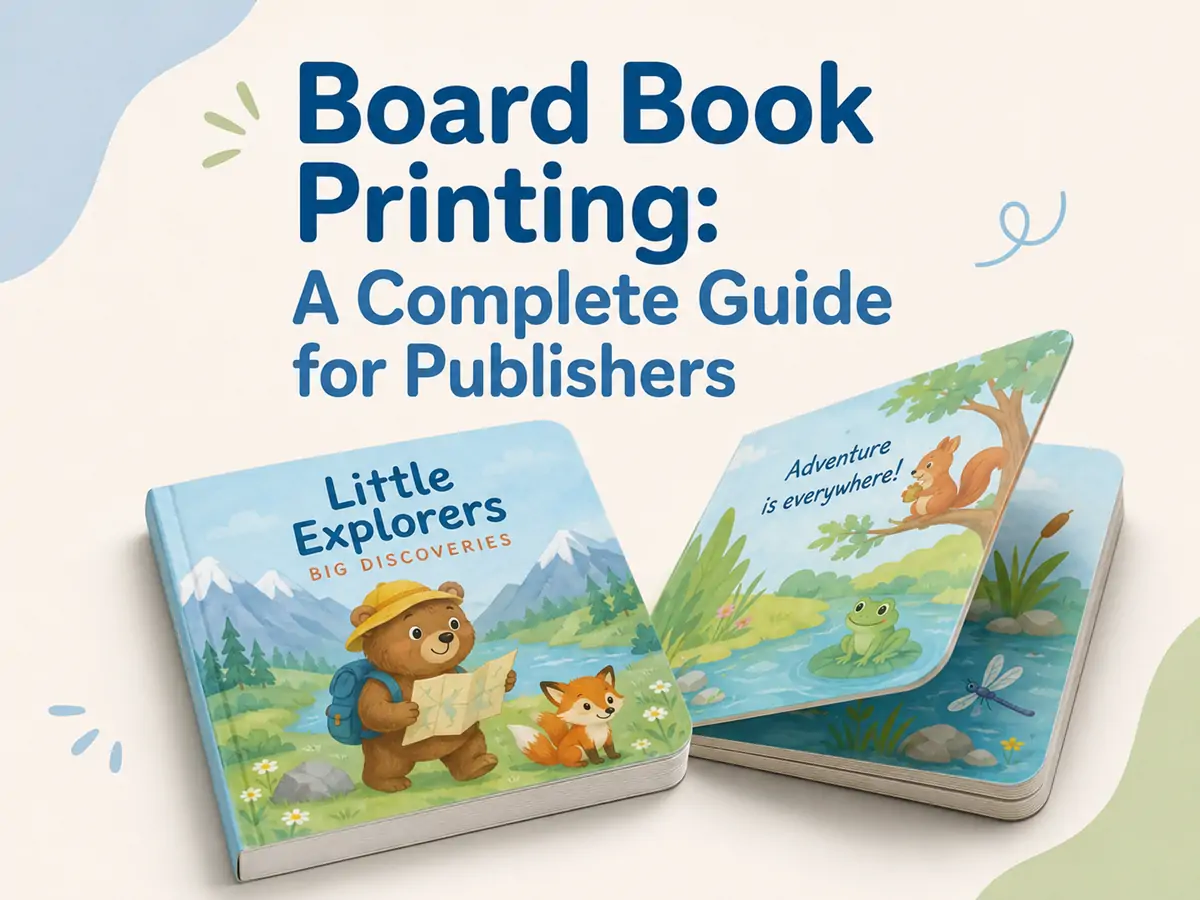
Board Book Printing: How to Plan a Durable and Engaging Children’s Book
Board books may look simple, but producing a good one involves much more than printing colorful illustrations on thick paper. For publishers, independent authors, educational brands, and children’s product companies, a successful board book printing project requires the right combination of structure, board thickness, binding, surface protection, child-friendly design, and finishing.
Unlike ordinary picture books, board books are built with thick, rigid pages that can handle frequent turning and repeated use. This construction makes them especially suitable for babies, toddlers, preschool learning materials, first-word books, and other publications designed for young readers.
If you are preparing to print a custom board book, here are the main decisions to consider before production begins.
Start With the Right Board Book Structure
The first decision is not color or finishing. It is the physical construction of the book. A traditional paperback or hardcover picture book normally uses flexible paper pages gathered into a book block. A board book works differently. Its printed sheets are folded and mounted together to create thick individual leaves.
This construction gives board books several practical advantages:
Pages are much harder to tear.
Thick leaves are easier for small hands to turn.
The book can tolerate frequent handling.
Laminated surfaces can be wiped more easily.
Rounded corners can create a softer, more child-friendly shape.
Short stories and large illustrations can be presented clearly across each spread.
Because the pages themselves form part of the structure, the choice of board thickness, page count, size, and binding should be considered together rather than separately.
Self-Cover or Hardcover: Which Board Book Should You Print?
One of the most important choices in custom board book printing is the cover construction.
Self-Cover Board Books
A self-cover board book uses the same thick board construction for the cover and the interior pages. It is the most straightforward board book format and works particularly well for:
First-word books
Alphabet and number books
Educational titles
Early-learning series
Promotional children’s books
Standard retail board books
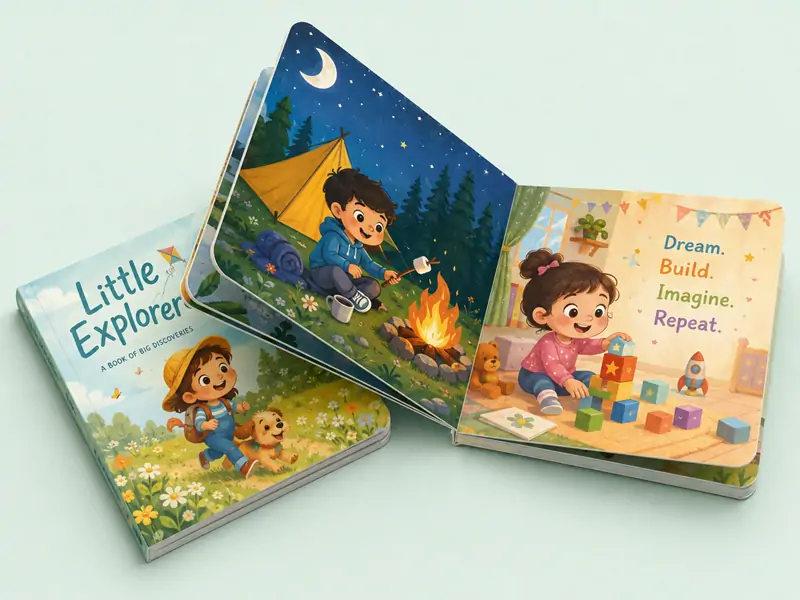
Because the cover does not require a separate hardcover case, production is simpler and the finished book is generally lighter and more economical. For many standard board book projects, self-cover construction provides a good balance between durability, appearance, and production cost.
Hardcover Board Books
A hardcover board book combines thick board pages with a separate rigid case. The outer cover can be made using grayboard wrapped with printed paper, specialty paper, cloth, or other cover materials. This format is especially suitable when the book needs a more premium presentation, such as:
Gift editions
Premium children’s brands
Collector-style books
Retail series
Keepsake books
Higher-value educational products
A separate hardcover also provides more possibilities for decorative finishing, including foil stamping, embossing, debossing, spot UV, textured materials, or padded covers.
The trade-off is higher production cost, additional weight, and a more complex manufacturing process.
Choose a Size That Works for the Reader
Board books are commonly designed in compact formats because the intended reader often needs to hold and turn the book independently.
Popular formats include square, portrait, and landscape designs. Square formats work particularly well for general picture books and early-learning titles because they offer generous space for illustrations. Portrait formats are useful for character-based stories, while landscape board books can work well for scenes, vehicles, animals, and panoramic illustrations.
There is no single standard size that fits every project.
Before deciding, consider:
Reader age
Illustration style
Number of words per spread
Finished book weight
Retail packaging
Shipping cost
Shelf presentation
A larger board book creates more visual impact, but it also becomes heavier as the page count increases.
Board Thickness Matters More Than You May Expect
Thickness has a major influence on how a board book feels.
If the pages are too thin, the finished product may lose the substantial feel buyers expect from a board book. If they are unnecessarily thick, the book can become bulky, heavy, and expensive. The ideal specification depends on the finished size, page count, target age, and product positioning.
When requesting a quotation from a board book printing company, it is therefore useful to provide both your expected page count and desired finished size. Your printer can then recommend an appropriate board construction instead of treating thickness as an isolated specification.
For premium projects, requesting a physical sample before mass production is particularly helpful because page stiffness is difficult to judge from numbers alone.
Design Board Books by Spreads, Not Just Individual Pages
Board book artwork should be planned around the way children actually see the book when it is open. A spread consists of the left and right pages viewed together. For illustration-heavy children’s books, treating the spread as one visual composition often creates a stronger result. Large characters, simple shapes, clear contrast, and limited text generally work better than crowded layouts. Also pay particular attention to the center area.
Important faces, small text, or essential visual details should not sit too close to the fold or mounting area.
Artwork should normally include bleed beyond the final trim line, while important text and illustrations should remain inside the safe area.
Before printing, your final files should clearly define:
Finished trim size
Bleed
Safe margins
Page order
Cover artwork
Color mode
Image resolution
Special finishing areas
Preparing these correctly before production helps avoid unexpected cropping, white edges, or important elements disappearing near the fold.
Use Surface Finishing to Protect the Book
Finishing on a board book is not purely decorative. Young children may repeatedly touch the pages with their hands, carry the book around, place it on different surfaces, or spill small amounts of liquid on it. For this reason, surface protection is an important part of children’s board book printing.
Matte and gloss lamination are common options.
Gloss lamination can make colors appear bright and lively, making it suitable for bold illustrations and educational books.
Matte lamination creates a softer appearance and is often selected for modern illustration styles or premium children’s brands.
The appropriate finish depends on both the visual direction of the book and how it will be used.
Rounded Corners Improve Both Function and Appearance
Rounded corners are strongly associated with board books. They create a softer visual profile while removing the sharp points found on conventional square-cut books. The corner radius can also influence the overall design. A larger radius gives the book a softer, more playful appearance, while a smaller radius maintains a more conventional book shape.
For custom-shaped children’s books, die cutting can go even further by creating books shaped like animals, vehicles, houses, fruits, letters, or other objects.
These formats can significantly increase shelf appeal, especially for early-learning and gift products.
Add Interactive Features When the Content Calls for Them
A board book does not have to remain a standard page-turning book. Interactive elements can transform it into a more engaging learning or play experience. Depending on the project, possible features include:
Lift-the-flaps
Die-cut windows
Slider tabs
Rotating wheels
Touch-and-feel materials
Shaped pages
Pop-up structures
Sound modules
Mirror elements
These features should be planned early.
Adding movable or tactile components after the artwork has already been completed can require substantial redesign because the mechanical structure affects page thickness, positioning, die lines, and assembly.
For complicated interactive books, it is usually best to confirm the structure with the manufacturer before finalizing all artwork.
Understand What Happens During Board Book Production
Although every factory may organize production differently, a typical board book project moves through several major stages.
Artwork is first checked for size, bleed, color setup, image quality, and page sequence. The sheets are then printed before receiving any required surface protection. After printing and lamination, sheets are cut and folded according to the book structure. The folded sections are accurately mounted together to create the thick board pages. The completed book block is then combined with either a self-cover or separate hardcover case.
After assembly, books are trimmed and any required corner rounding or die cutting is completed.
The finished books then pass through quality inspection before packing.
Because board books depend heavily on alignment and mounting accuracy, quality control should look beyond printing color alone.
A good inspection process should also check:
Page alignment
Folding accuracy
Glue strength
Page sequence
Surface scratches
Lamination
Corner cutting
Book opening
Cover alignment
Finished size
Safety Should Be Considered From the Beginning
Board books are often produced for very young children, so material selection and construction need additional attention.
Rounded corners, secure assembly, appropriate inks and coatings, durable adhesives, and properly attached interactive components are all important considerations. Publishers selling children’s products should also confirm the testing and certification requirements that apply in their destination market. These requirements can vary depending on the country, reader age, book structure, and any additional components included in the product.
Safety therefore should not be treated as a final inspection item. It should influence material and structural decisions from the beginning of the project.
How to Control Board Book Printing Costs
Board book pricing is affected by more than quantity.
Important cost factors include:
Finished size
Number of pages
Board thickness
Self-cover or hardcover construction
Printing colors
Lamination
Corner rounding
Die-cut shapes
Interactive components
Special cover finishing
Order quantity
Packaging
If budget is important, start with the specifications that directly affect usability: size, page count, structure, and board thickness.Decorative features can then be added according to your retail positioning.
For example, a standard self-cover book with rounded corners may be appropriate for an educational series, while a premium gift title may justify a hardcover case, foil stamping, embossing, or interactive elements.
The best specification is not necessarily the most expensive one. It is the one that matches the product’s audience, selling price, distribution channel, and expected use.
What Information Should You Send to a Board Book Printer?
A clear request for quotation can save considerable time. Before contacting a manufacturer, prepare the following information whenever possible:
Finished size: for example, 160 × 160 mm
Page count: including whether the cover is counted separately
Cover type: self-cover or hardcover
Printing: full color or other requirements
Board/page thickness: if already decided
Surface finish: matte or gloss lamination
Special features: rounded corners, die cuts, flaps, sliders, foil, embossing, etc.
Quantity: expected print run
Delivery country or postal code: for shipping estimation
If some specifications are still undecided, that is normal. An experienced board book manufacturer should be able to recommend options based on your target market and budget.
Creating a Board Book That Works Beyond the Artwork
Successful board book printing is a combination of illustration, engineering, materials, and manufacturing.
Beautiful artwork attracts attention, but construction determines how the product performs once it reaches a child’s hands.
For standard projects, a self-cover board book offers an efficient and economical solution. For premium retail or gift editions, hardcover construction provides additional protection and more finishing possibilities. Interactive features can further increase engagement when they are designed into the project from the beginning.
By considering structure, size, board thickness, finishing, artwork, safety, and production requirements before mass printing, publishers and creators can build a board book that is visually appealing, practical to use, and durable enough for repeated reading.
Whether you are developing your first children’s title or expanding an established product line, working closely with an experienced board book printing manufacturer can help turn the original artwork into a production-ready book that meets both creative and commercial goals.