
Sewn Binding vs Perfect Binding: Which Is Better for Your Book?
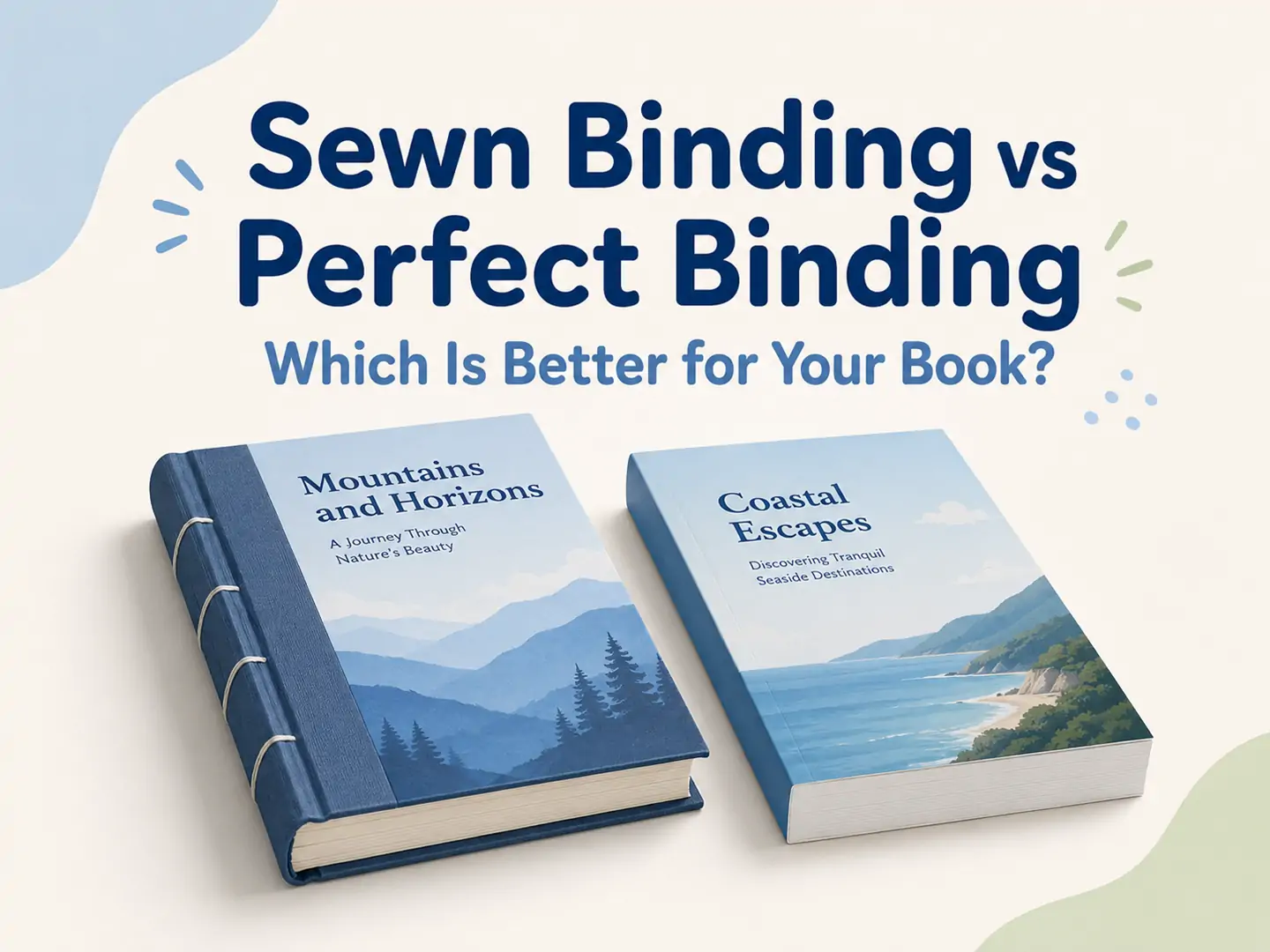
Sewn Binding vs Perfect Binding: Which Is Better for Your Book?
Choosing the right binding method is one of the most important decisions in custom book printing. Binding not only affects how a book looks, but also influences its durability, opening performance, production cost and overall reading experience.
Sewn binding and perfect binding are two commonly used options for novels, manuals, journals, catalogs and other multi-page publications. While both methods can produce professional-looking books, they are designed for different budgets, page counts and product requirements.
In this guide, we compare sewn binding vs perfect binding to help authors, publishers and brands choose the most suitable option for their projects.
What Is Sewn Binding?
Sewn binding, also known as section-sewn or Smyth-sewn binding, is a durable binding method in which printed sheets are folded into sections called signatures. The signatures are then sewn together with thread to form a strong book block.
After sewing, the book block can be attached to a hardcover case or finished with a softcover. Because the pages are physically connected by thread, sewn binding provides better strength and a longer usable life than binding methods that rely only on adhesive.
Sewn binding is commonly used for:
Hardcover novels
Special-edition books
Art and photography books
Cookbooks
Children’s books
Journals and notebooks
Textbooks
Reference books
Books designed for frequent use
It is particularly suitable for premium books that need to remain durable after repeated opening and closing.
What Is Perfect Binding?
Perfect binding is an adhesive-based binding method commonly used for paperback books. Individual pages or folded sections are gathered together, and the spine edge is roughened before a strong adhesive is applied. A printed paper cover is then wrapped around the book block.
The three open sides of the book are trimmed to create clean, even edges. This produces the familiar flat-spine appearance seen on many paperback novels, magazines, catalogs and manuals.
Perfect binding is commonly used for:
Paperback novels
Product catalogs
Company brochures
Training manuals
Workbooks
Magazines
Event programs
Short-run promotional publications
Perfect binding is popular because it offers a professional appearance at a relatively economical production cost.
Sewn Binding vs Perfect Binding: Key Differences
Feature | Sewn Binding | Perfect Binding |
|---|---|---|
Binding method | Pages or signatures are sewn together with thread | Pages are secured mainly with adhesive |
Durability | Excellent | Good for normal use |
Opening performance | Opens more easily and relatively flat | Usually requires more pressure to remain open |
Production cost | Higher | Lower |
Production time | Longer | Shorter |
Best for | Premium, hardcover and frequently used books | Economical paperbacks, catalogs and manuals |
Page security | Very strong | Depends on adhesive, paper and production quality |
Perceived value | Premium | Standard to professional |
Typical cover options | Hardcover, cloth cover, PU leather or softcover | Mainly printed softcover |
Long-term use | Highly suitable | Suitable for standard and short-to-medium-term use |
1. Durability
Durability is one of the biggest differences between sewn binding and perfect binding.
With sewn binding, thread passes through the folded signatures and connects the sections together. Even after extensive use, the pages remain securely attached to the book block. This makes sewn binding suitable for books expected to be stored, collected or frequently read for many years.
Perfect-bound books depend primarily on the adhesive applied to the spine. Modern binding adhesives can provide reliable results when the paper, glue and spine preparation are properly matched. However, perfect binding is generally not as strong as a sewn structure for books that will be opened repeatedly or handled intensively.
If long-term durability is a priority, sewn binding is usually the better choice.
2. Opening and Reading Experience
A sewn-bound book opens more comfortably because its folded sections can move independently along the spine. Depending on the book structure, cover and spine design, the pages can open relatively flat without placing excessive pressure on the binding.
This feature is especially valuable for:
Cookbooks that need to remain open on a table
Journals and notebooks used for writing
Art books with images extending across two pages
Children’s books that receive frequent handling
Reference books used for long reading sessions
Perfect-bound books tend to have a tighter spine. Readers may need to hold the pages open, particularly when the book is new or has many pages.
It is important to note that standard sewn binding is not automatically the same as true lay-flat binding. If completely flat opening is required, the book’s paper, spine construction, cover and binding method must all be designed for that purpose.
3. Appearance and Perceived Value
Both binding methods can create attractive and professional books, but they communicate different levels of positioning.
Perfect binding produces a clean square spine that can display the book title, author name or company logo. It is an excellent choice for commercial paperbacks and cost-sensitive publications.
Sewn binding is more commonly associated with premium and collectible books. It can be combined with:
Case-bound hardcover construction
Cloth or PU leather covers
Foil stamping
Embossing or debossing
Spot UV
Dust jackets
Ribbon markers
Head and tail bands
Sprayed or gilded edges
Slipcases and presentation boxes
For special-edition novels, collector’s books and premium brand publications, sewn binding usually creates stronger perceived value.
4. Production Cost
Perfect binding is generally more economical because the production process is faster and requires fewer binding steps. It is often the preferred option for publishers that need to control the unit price of standard paperback editions.
Sewn binding costs more because the signatures must be folded, gathered and sewn before the book block is completed. A sewn hardcover also requires additional processes such as case making, casing-in and pressing.
The final cost of either option depends on several factors:
Finished book size
Page count
Printing quantity
Interior paper
Color or black-and-white printing
Cover material
Binding structure
Surface finishes
Packaging requirements
Shipping destination
If the book will be sold as a premium or limited edition, the additional cost of sewn binding can often be supported by a higher retail price and better customer experience.
5. Page Count and Paper Selection
The suitability of a binding method also depends on the book’s page count and paper thickness.
Perfect binding requires enough spine thickness for the adhesive and cover to form a stable structure. Very thin publications may be better suited to saddle stitching instead.
For thick perfect-bound books, the inner margins must be carefully planned because content close to the spine can become difficult to see. A thick or stiff paper may also reduce how comfortably the book opens.
Sewn binding works well for books with medium or high page counts, but the page count normally needs to fit the printer’s signature arrangement. Blank pages or minor page-count adjustments may sometimes be required to create an efficient sewing structure.
Before completing the layout, it is advisable to confirm the following details with the printer:
Final trim size
Total page count
Selected paper
Binding method
Spine width
Inner margin requirements
Signature arrangement
This helps prevent layout changes after the files have already been finalized.
When Should You Choose Sewn Binding?
Choose sewn binding when:
The book needs to last for many years.
Readers will open and close it frequently.
A premium appearance is important.
You are producing a hardcover or special edition.
The book contains important two-page spreads.
The product will include premium cover or edge finishes.
The retail positioning can support a higher production cost.
The book is intended as a collectible, gift or keepsake.
For deluxe novels, photo books, cookbooks, journals and collector editions, sewn binding is often worth the additional investment.
When Should You Choose Perfect Binding?
Choose perfect binding when:
The project has a limited printing budget.
You are producing a standard paperback.
The book does not need to open completely flat.
Fast and efficient bulk production is important.
The publication is intended for normal rather than intensive use.
You are printing catalogs, manuals, magazines or promotional books.
You want a clean printable spine at an economical price.
Perfect binding is a practical choice when affordability and professional appearance are more important than maximum durability.
Can Perfect Binding Be Combined With Sewing?
Yes. Some books use a sewn-and-glued structure in which the signatures are sewn first and then reinforced with adhesive at the spine.
This construction combines the page security of thread sewing with the structural support of adhesive. It is commonly used for high-quality hardcover books and premium softcover books.
When requesting a quotation, ask whether the proposed binding is:
Adhesive-only perfect binding
Sewn softcover binding
Sewn hardcover binding
Lay-flat binding
These terms should not be treated as interchangeable because their structures, costs and opening performance are different.
How to Choose the Right Binding for Your Project
Before selecting a binding method, consider how the finished book will be used.
For example, an affordable paperback novel may perform well with perfect binding. A limited-edition fantasy novel with foil stamping, patterned sprayed edges and a slipcase would usually benefit from sewn hardcover binding.
Ask yourself these questions:
How often will readers use the book?
How long should the book remain in good condition?
Does it need to stay open while being read or used?
Are there images or designs crossing the center of a spread?
Is the book positioned as a standard or premium product?
What is the target retail price?
What is the available production budget?
Will special finishes be added to the cover or page edges?
The best binding is not simply the strongest or least expensive option. It is the option that fits the book’s intended use, target market and price positioning.
Common Binding Mistakes to Avoid
Selecting Binding Based Only on Price
A lower unit price may look attractive, but an unsuitable binding structure can affect the reading experience and durability of the finished product.
Placing Important Content Too Close to the Spine
Perfect-bound books need sufficient inner margins. Text, page numbers and important image details should not be placed too close to the gutter.
Assuming Sewn Binding Always Lies Completely Flat
Sewn binding improves opening performance, but true lay-flat behavior depends on the complete book structure.
Finalizing the Design Before Confirming Specifications
The trim size, paper, page count and binding method should be confirmed before preparing the final print-ready PDF.
Ignoring the Physical Sample
A digital proof can check content and basic color, but it cannot fully demonstrate spine strength, opening performance, paper feel or the final binding structure. For premium projects, reviewing a physical sample before mass production is strongly recommended.
Frequently Asked Questions
Is sewn binding stronger than perfect binding?
Yes. Sewn binding is generally stronger because the folded sections are physically connected with thread. It is better suited to books that require frequent use or long-term storage.
Is perfect binding suitable for novels?
Yes. Perfect binding is widely used for standard paperback novels. It provides a clean appearance and helps keep production costs under control.
Does sewn binding lie flat?
Sewn binding normally opens more easily and flatter than adhesive-only perfect binding. However, it should not automatically be described as true lay-flat binding.
Can sewn binding be used for softcover books?
Yes. Sewn book blocks can be combined with either hardcover cases or softcovers. A sewn softcover provides greater durability while retaining a flexible cover.
Which binding is better for a hardcover book?
Sewn binding is generally recommended for premium hardcover books, especially when durability and reading comfort are important. Some economical hardcovers may use adhesive-only binding, depending on their specifications.
Which binding is cheaper?
Perfect binding is normally less expensive because it requires fewer production processes. Sewn binding involves additional folding, gathering and sewing steps.
What is the minimum order quantity for custom books?
At SeSe Printing, the standard minimum order quantity for custom book printing is 300 copies per design. The most cost-effective quantity depends on the book size, page count, materials and finishing requirements.
Custom Sewn and Perfect Bound Book Printing
SeSe Printing provides custom sewn binding, perfect binding and hardcover book production for publishers, independent authors, designers and brands.
Our available customization options include:
Custom book sizes
Full-color or black-and-white printing
Coated and uncoated paper options
Softcover and hardcover binding
Round or square spines
Foil stamping
Embossing and debossing
Spot UV
Cloth and PU leather covers
Dust jackets
Ribbon markers
Sprayed and gilded edges
Slipcases and presentation boxes
To receive an accurate quotation, please provide:
Finished size
Page count
Interior printing colors
Paper preference
Cover type
Binding method
Special finishes
Order quantity
Delivery country or postal code
Not sure whether sewn binding or perfect binding is better for your book? Send us your book specifications, and our printing team will recommend a suitable structure based on durability, appearance, budget and intended use.