

Board Book Safety Features: The Importance of Rounded Corners
图片1
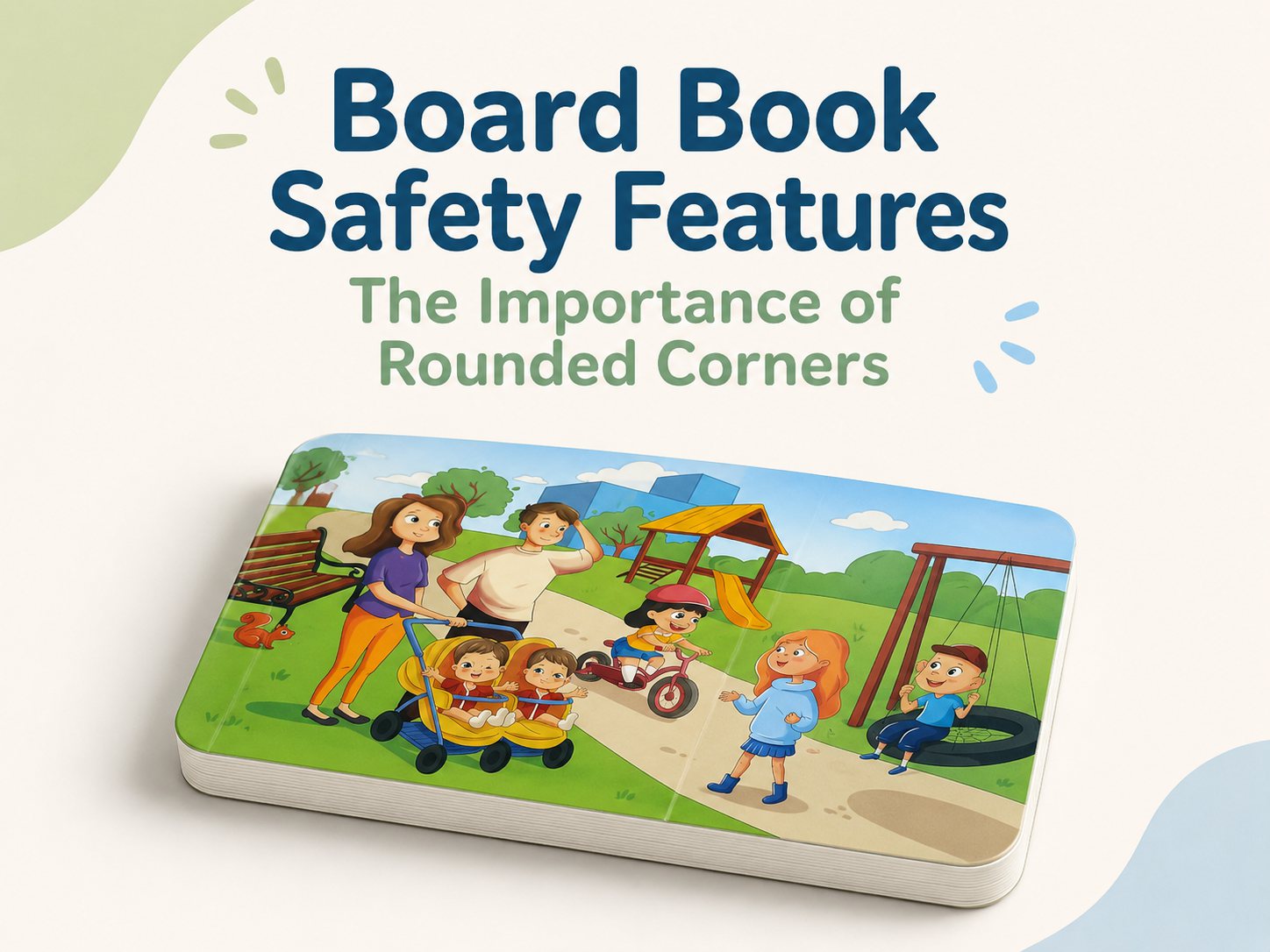
Board books are designed for babies, toddlers, and young children, using thick paperboard pages that can withstand frequent handling and rough use. One important feature is rounded corners, which improve safety, durability, comfort, and overall appearance.
For publishers, authors, educational organizations, and toy manufacturers, rounded corners help create safer, more practical, and more professional children’s board books.
This guide explains the key benefits, applications, design tips, and common questions about rounded corner board books.
What Is Round Corner in Board Book Printing?
图片2
A round corner, also known as a rounded corner, is a common finishing process in board book printing. It involves trimming the sharp 90-degree corners of a board book into smooth, curved edges using specialized die-cutting equipment.
During board book production, the pages are printed, laminated, mounted onto thick paperboard, and then die-cut into their final shape. At this stage, the book corners can be kept square or finished with rounded corners.
For children’s board books, the most common rounded corner size is a 0.25-inch radius. This creates a smooth edge and removes sharp points, making the book safer and more comfortable for babies, toddlers, and young children to handle.
Rounded corners are typically applied to:
Front covers
Back covers
Interior board pages
Interactive components
Custom-shaped board books
The process is highly precise and ensures every page aligns perfectly after trimming.
Today, rounded corners have become one of the most recognizable characteristics of modern board books, particularly those designed for infants and toddlers.
Why Round Corner Matter in Board Book Printing
图片3
While rounded corners may seem like a small detail, they provide significant benefits throughout the life of a book.
Improved Safety for Babies and Toddlers
Safety is the main reason rounded corners are commonly used in children’s board books. Babies and toddlers, especially children aged 0–4, often handle books in active and unpredictable ways. They may:
Grab books with both hands
Throw books
Drop books repeatedly
Place books near their faces
Crawl while carrying books
Put books in their mouths
Sharp corners can pose a risk of scratching delicate skin or causing minor injuries around the face and eyes.
Rounded corners help eliminate these risks by removing pointed edges and creating smoother surfaces.
Parents, educators, and childcare providers often prefer board books with rounded corners because they provide greater peace of mind during everyday use.
For books targeted at babies under four years old, rounded corners are widely considered an industry best practice.